





Introduction
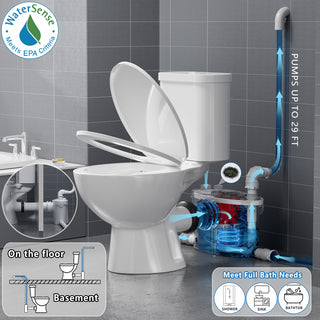
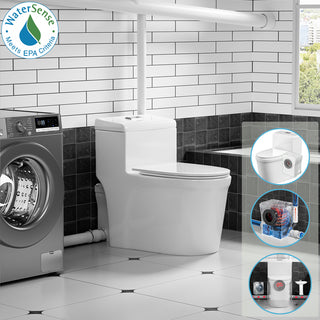
Small bathrooms often demand creative thinking. If you’re struggling with tight layouts or awkward spacing, you may find yourself asking: “Can I just put the toilet in the corner?” It’s a practical question—and the good news is: yes, you can install a toilet in a corner, as long as a few key conditions are met.
In this guide, we’ll walk you through what’s required for a successful corner toilet installation, the pros and cons of choosing a corner toilet, and how to know if it’s the right choice for your bathroom.
Can You Install a Toilet in a Corner?
🔍 Yes, it’s absolutely possible to install a toilet in a corner—but it must be planned properly.
There’s nothing in most plumbing codes that prohibits corner placement, as long as the toilet meets minimum clearance requirements (typically 15 inches from the toilet’s centerline to each adjacent wall). The biggest technical consideration is the location and orientation of the drain pipe, known as the rough-in.
Most conventional toilets are designed to sit flat against a straight wall, but corner toilets have a triangular tank and require the waste line to be positioned directly along the bathroom’s diagonal axis. That may mean adjusting the plumbing layout or reorienting the toilet flange (the drain fitting in the floor).
Do You Need a Special Toilet for the Corner?
🔍 Yes—you’ll generally need a toilet specifically designed for corner installation.
These models feature a triangular-shaped tank that fits snugly into a 90-degree angle, allowing the toilet to sit at the correct orientation without wasting space. Attempting to rotate a standard toilet into a corner rarely works well—it often leads to poor aesthetics, awkward overhang, or unsteady placement.
Corner toilets are widely available from major brands, although the selection is narrower than traditional models. When shopping, look for terms like:
- Corner toilet
- Triangle tank toilet
- Corner-fit elongated toilet
Why Choose a Corner Toilet? Pros & Cons
✅ Advantages
- Saves space: Perfect for small bathrooms, half-baths, attic conversions, or powder rooms where every inch counts.
- Creates a cleaner layout: Opens up wall space for vanities or towel bars and can improve visual flow.
- Stylish and modern: Corner toilets have a unique, space-conscious aesthetic that can elevate a tight room.
❌ Drawbacks
- Limited selection and higher price: Fewer models available; pricing may be slightly above standard toilets.
- Installation requires precision: Proper drain alignment and flange rotation may be needed.
- Not ideal for families with toddlers: As the famous line goes—
| "Nobody puts a baby in the corner." 😄
How Much Space Do You Need for a Corner Toilet?
A typical corner toilet extends about 33 inches from the corner outward, and measures about 18–20 inches wide at the front of the bowl. To install one comfortably, you’ll want:
- Rough-in distance: basically 12" from each wall to the drain center
- Minimum clearances: ≥15" from centerline to each wall face
While corner toilets don’t necessarily use less total volume than regular toilets, they make better use of awkward or underutilized areas, especially in oddly shaped bathrooms.
What to Consider Before Installing a Corner Toilet
Corner installation may sound simple, but success depends on getting a few critical factors right:
- Drain location: The rough-in must be centered diagonally in the corner. Existing plumbing may need to be moved.
- Flange orientation: The toilet flange usually needs to be rotated 45 degrees to match the mounting holes of the toilet base.
- Wall angle: Ideally, the corner should be close to a true 90-degree angle. If it's significantly wider or narrower, the tank may not sit flush against both walls, leading to visible gaps or uneven contact.
- Floor reinforcement: As with any toilet, ensure the floor is level and strong enough to support the unit.
Pro tip: Before committing, place the toilet on the floor without sealing it. Check that the bolt holes align with the flange slots and that the tank sits square in the corner.
Can You Turn a Regular Toilet into a Corner Toilet?
Technically, no—and realistically, you shouldn’t try.
Standard toilets are engineered to sit flush against a straight wall. Trying to rotate them into a corner results in:
- Tank gaps or misalignment
- Drain pipe mismatch
- Base bolt holes that don’t line up
Bottom line: If you want to install a toilet in the corner, get a toilet made for the corner. It’ll save you time, money, and frustration.
Conclusion: Is a Corner Toilet Right for You?
If you’re renovating a small bathroom or trying to make the most of a tight space, a corner toilet can be a smart and stylish solution. It’s not a one-size-fits-all answer, but with proper planning and installation, it can free up space and make your layout more functional.
Just remember:
- Choose a true corner toilet model;
- Ensure your plumbing and wall angle are suitable;
- Consider hiring a professional if you’re unsure about adjustments.
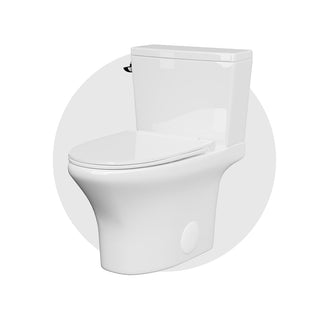
Need help picking the right corner toilet? Check out our corner toilet for compact, ADA-compliant options that combine form and function.
📌 FAQs
Q1: Can you put a regular toilet in a corner?
→ Not reliably. Use a corner toilet designed for that purpose.
Q2: Is it code compliant to install a toilet in a corner?
→ Yes, as long as spacing meets local plumbing codes.
Q3: Are corner toilets smaller than regular toilets?
→ Not necessarily; they save space by layout, not by size alone.