




Why Spring Is the Right Time to Renovate Your Bathroom
Spring is one of the busiest — and most rewarding — home improvement seasons in the United States. Warmer weather keeps construction moving smoothly, contractor schedules are more flexible than they will be come summer, and after months of winter use, many homeowners are ready to breathe new life into their most-used spaces.
The challenge is that most people dive straight into aesthetics — Pinterest mood boards, tile samples, fixture catalogs — and quickly hit walls: budget overruns, layout constraints, or trendy choices that date poorly. A smarter approach is to build your plan around a clear framework: understand what's actually trending, prioritize upgrades that deliver lasting functional value, and allocate your budget where it matters most.
This guide walks you through exactly that. You'll learn the three macro trends shaping American bathrooms in 2026, how to apply them whether you're doing a full gut renovation or a weekend refresh, and how to spend wisely across any budget level.
The Three Macro Trends Defining Bathrooms in 2026
Drawing on 2026 trend reports from Architectural Digest, Elle Decor, House Beautiful, Real Simple, the National Kitchen & Bath Association (NKBA), and Fixr, this year's renovation landscape is converging around three clear themes:
| Trend | Core Idea |
|---|---|
| Warmth Over Contrast | Soft neutrals and natural tones replace cold black-and-white schemes |
| Functional Luxury | Comfort, low maintenance, and family-ready layouts take center stage |
| Organic Materials | Natural textures and finishes — chosen for durability, not just beauty |
Together, these trends mark a meaningful cultural shift: the modern bathroom is no longer designed as a showroom. As Architectural Digest has noted, the spaces gaining traction today are "warm, authentic, and designed for real daily life."
Trend 1 — Warmth Over Contrast
The End of Cold, High-Contrast Bathrooms
The stark black-and-white bathroom — once celebrated for its visual punch and minimalist clarity — is officially in decline. According to Fixr's 2026 industry survey, 75% of design professionals confirmed that all-white, all-grey, pure-black, and high-contrast monochrome schemes are being phased out. Better Homes & Gardens and The Spruce echo the sentiment: homeowners and designers alike increasingly describe these palettes as cold, flat, and dated.
The NKBA's 2026 Bathroom Trends Report puts the shift in numbers: 96% of industry experts now prioritize soft, neutral tones. Leading the way are warm whites, greige, terracotta, oat, sage green, and earthy clay. The new bathroom is therapeutic — a space that feels as good to inhabit as it looks in a photograph.
Wood Textures and Layered Color Are Back
Natural wood-grain finishes are re-emerging as a defining element in bathroom design, bringing tactile warmth that paint and tile alone cannot replicate. Rather than bold color contrasts, 2026 bathrooms lean into tonal layering — think tone-on-tone pairings (warm ivory vanity against a slightly deeper oat wall) and surfaces that play with subtle grain and texture rather than competing hues.
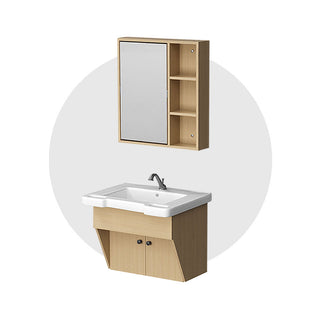
Floating, wall-mounted vanities in wood or wood-look finishes are particularly well-suited to this direction: they keep the warmth of natural material while preserving the lightness and visual openness that work so well in American bathrooms of all sizes.
Trend 2 — Functional Luxury
Functional luxury does not mean extravagance for its own sake. It means building comfort, ease, and adaptability into every decision — a philosophy endorsed by Elle Decor and Real Simple as the dominant design ethos of the moment. The best 2026 bathrooms are not impressive because of their complexity; they're impressive because of how effortlessly they work.
Seamless Surfaces: Beautiful and Easy to Clean
"Seamless design" has emerged as the practical expression of functional luxury. The core logic is simple: fewer joints, crevices, and exposed frames mean less time scrubbing and fewer places for soap scum and mildew to hide. This translates into three concrete choices:
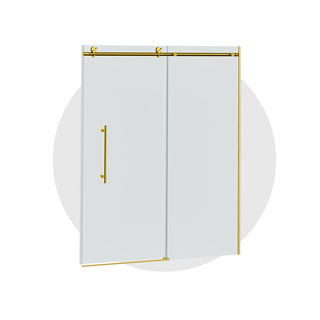
- Frameless shower enclosures — Clean lines, uninterrupted sightlines, and no metal channels to collect grime.
- Large-format tiles — Fewer grout lines on floors and walls reduces maintenance significantly and creates a more cohesive, expansive feel.
- Continuous, wipe-clean surfaces — Smooth counters, recessed niches, and minimally profiled fixtures cut back on hard-to-reach cleaning zones.
Family-Centered Layouts
The bathroom as a solo-user space is a relic. Today's American homes — with varied schedules, multi-generational households, and a premium on morning efficiency — demand layouts designed around multiple users. Key moves include:
- Dual vanity zones or separate sink-and-shower circulation paths that let two people use the bathroom simultaneously without collision.
- Privacy partitions for toilet areas — whether a glass panel, a half-wall, or a full compartment — that add discretion without closing off the space entirely.
- Integrated storage for family use: recessed niches, medicine cabinets, and below-vanity drawers that keep multiple people's essentials organized and accessible.

Accessibility as a Standard Feature
What used to be classified as "ADA design" or "aging-in-place" features are now treated as simply good design — features that benefit everyone, not just those with mobility challenges. Smart homeowners are building in:
-
Curbless showers — Eliminating the threshold makes entry easier, removes a tripping hazard, and makes the space look larger.

- Generous clearance around fixtures — Enough room to move comfortably, future-proofing the bathroom for children, older family members, or changing circumstances.
- Ergonomic fixture heights — Counters, tall toilets, and grab bars positioned for genuine comfort, not just code minimums.

Layered Lighting
A single ceiling fixture or a strip of light above the mirror is no longer sufficient. The 2026 bathroom treats lighting as a multi-dimensional tool for both function and atmosphere. Specifically:
-
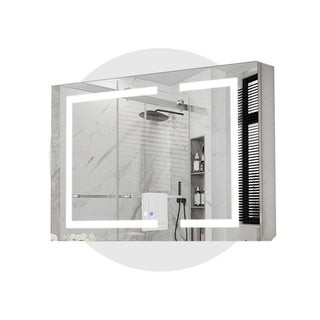
Illuminated medicine cabinets — Combining storage, a mirror surface, and lighting, these replace the outdated plain mirror while solving three problems at once.

- Side-mounted wall sconces — Flanking the mirror at face height eliminates the unflattering shadows cast by overhead-only lighting, making the bathroom dramatically better for grooming tasks.
In terms of style, elongated minimalist sconces, smoked-glass spheres, and brushed-metal cone fixtures are leading the market — clean silhouettes that integrate naturally with warm-toned, organic bathrooms.
Trend 3 — Organic Materials
The organic materials trend is not about importing the outdoors wholesale into your bathroom. It's about achieving the visual richness and sensory warmth of natural materials while choosing versions that can genuinely withstand a wet, high-traffic environment. The guiding principle: natural beauty, practical durability.
Stone: Choosing Performance Over Prestige
Marble remains visually arresting — but its maintenance demands (regular sealing, vulnerability to etching and staining) are prompting a meaningful shift. The materials gaining momentum in 2026 are:
- Quartzite — A natural stone with marble-like veining but significantly greater hardness and stain resistance. It looks luxurious and performs reliably.
- Engineered stone — Consistent patterning, near-zero porosity, and no sealing required make it the practical workhorse of the natural-look category.
As Architectural Digest has observed, today's consumers are gravitating toward materials that deliver "natural beauty alongside everyday durability" — and that calculus is reshaping the stone market.
Tile: Texture, Pattern, and Restraint
Tile is having a nuanced moment. The flat, uniform large-format tile of the past decade is giving way to surfaces with more character — but deployed with intentionality rather than maximalism. Trending choices include:
- Handcrafted glazed tiles and three-dimensional textured surfaces — imperfect in a beautiful, intentional way.
- Classic laying patterns making a return: herringbone, basket weave, and mosaic accents.
The key design discipline: use expressive tiles as focal points — a feature wall behind the vanity, a shower floor, a niche surround — rather than covering every surface. Restraint amplifies impact.
Hardware Finishes:
The matte black hardware wave is receding. In its place, two directions are gaining ground:
- Brushed metal finishes (nickel, brass, bronze) — More forgiving of water spots and fingerprints, and they acquire a richer patina over time rather than showing wear.
- Mixed metals — Pairing two complementary finishes (warm brushed brass and cool brushed nickel, for example) adds sophistication and a curated, layered aesthetic.
How to Apply These Trends to Your Renovation
Option A — Full Renovation
If your budget allows and you're ready for meaningful change, a full renovation is the opportunity to bring all three trends together as a coherent system. Think of it this way: warm neutrals (Trend 1) set the palette; functional, low-maintenance layouts (Trend 2) determine the structure; organic materials (Trend 3) add texture and longevity. When these work together, the result is not just stylish today — it's a bathroom designed to feel right for the next decade.
A systems approach also protects investment: rather than piecing together unrelated choices, every decision reinforces the others, and you avoid the "renovated in pieces" incoherence that plagues many American bathrooms.
Option B — Targeted Upgrades
Not everyone needs — or wants — to start from scratch. For homeowners who prefer a classic, understated aesthetic or simply want to refresh rather than rebuild, selective upgrades can deliver outsized results with minimal disruption:
- Low-cost trend alignment: Swap a plain mirror for an illuminated medicine cabinet. Add a small wall-mounted wood shelf or organizer. Replace a shower curtain with a warm-toned fabric version. These changes alone address all three trends without touching a single tile.
-
Preserve the classics, upgrade the essentials: Keep a clean, simple aesthetic but replace high-effort pieces: a concealed-trapway toilet (far easier to clean), or matte black hardware swapped for brushed brass or nickel (better aging, fewer smudges). The core look stays; daily friction drops.

- Decorative accents: A handcrafted tile panel or mosaic insert in one zone (behind the vanity, inside a shower niche) can update a bathroom's entire character for a fraction of the cost of full re-tiling — and won't require removal if trends shift again.
Option C — Small Bathrooms, Basements & Garage Baths
Constrained spaces deserve tailored thinking, not just scaled-down versions of full renovations.
Small Bathrooms
The governing principle is space efficiency without sacrificing warmth. Practical moves:
-
Corner vanities or wall-hung vanities — Corner vanities make use of otherwise wasted angles, fitting a full sink and storage into tight footprints without crowding the main floor space. Wall-hung versions take a different approach: lifting the cabinet off the floor opens up visual breathing room and eliminates the hard-to-clean gap beneath a floor-mounted unit. Both are purpose-built for small bathrooms where every inch counts.

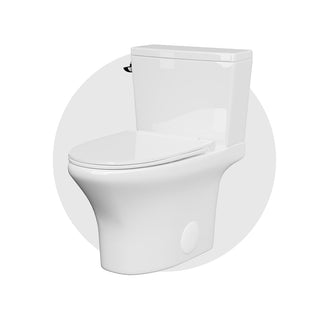
- Compact toilets — Space-saving options worth considering include round-bowl toilets (shorter front-to-back depth, ideal for tight floor plans), corner toilets (angled to tuck into unused wall corners), and slim-tank toilets (reduced wall projection, well-suited to narrow galley-style bathrooms).
- Illuminated medicine cabinets — A single cabinet integrates lighting, storage, and mirror into one footprint-neutral fixture, making it a natural fit for any size-constrained bathroom.
- Light warm palettes — Warm oat, ivory, or blush on the walls, with thin-profile metal accents and small wood-grain elements. Avoid deep colors that compress visual space.
Basement and Garage Bathrooms
These spaces typically face two hard constraints: pipes that are difficult to reroute, and a utilitarian character that can feel at odds with the softness of 2026's design direction. The solutions:
-
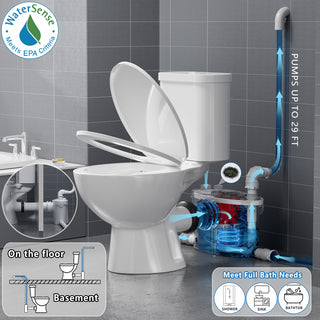
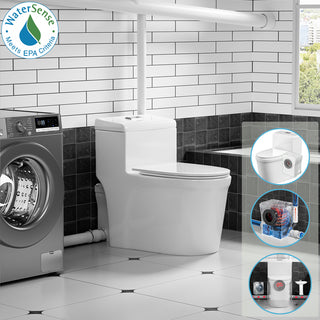
Macerating toilet systems — These self-contained units pump waste upward and horizontally without requiring below-slab plumbing work, making a fully functional full bathroom achievable in almost any below-grade or remote location.

- Easy-clean, moisture-tolerant materials — Engineered stone counters, large-format floor tiles (fewer grout lines), and brushed metal hardware are naturals here: durable, wipe-clean, and able to absorb the casual character of a utility space.
- Functional minimalism — Keep the layout simple: an illuminated medicine cabinet for light and storage, one thoughtful wall accent (a handcrafted tile strip, a warm-toned paint color), and clean surfaces throughout.
How to Allocate Your Renovation Budget
Typical US Bathroom Renovation Budget Breakdown
| Category | Typical Share of Total Budget |
|---|---|
| Fixtures (toilet, vanity, shower, tub) | 30 – 40% |
| Labor and plumbing | 30 – 50% |
| Finishes (tile, paint, hardware) | 20 – 30% |
These ranges shift meaningfully based on scope, local labor rates, and whether any plumbing is being relocated. The best baseline rule: get at least three contractor quotes before locking in your fixture budget.
Where to Invest for the Best Return
Some renovations improve your daily life every single day; others look impressive in photos but change the lived experience very little. Prioritize the first category:
- Toilet — The most-used fixture in any home. Upgrading to a water-efficient, easy-clean model (concealed trapway, soft-close seat, dual flush) pays dividends in comfort and reduced maintenance immediately.
- Vanity and medicine cabinet — These define the bathroom's visual identity and bear the heaviest daily wear. A good vanity with integrated storage is an investment in both aesthetics and daily function.
- Lighting — Disproportionately underinvested. Proper layered lighting transforms how a bathroom feels and functions, and the cost delta between a single fixture and a well-considered two- or three-point scheme is smaller than most homeowners expect.
Spring 2026 Renovation Priority Checklist
Sequence: Function First, Then Style
The order in which you plan your renovation matters enormously. Start from what you use and end with what you see:
- Toilet — highest daily use frequency, highest functional return on investment.
- Vanity and storage — the visual and organizational anchor of the bathroom.
- Lighting and ventilation — often the most impactful upgrades for the least disruption.
- Surfaces and finishes — tile, paint, hardware — the last layer, and the easiest to iterate.
Choose Products That Lower Long-Term Costs
The best bathroom investments reduce ongoing effort and expense rather than just impressing at purchase:
- Water-efficient fixtures — WaterSense-certified toilets and showerheads pay for their premium over time in utility savings.
- Low-maintenance surfaces — Engineered stone, large-format tile, and frameless glass have a higher initial cost but demand dramatically less maintenance than their alternatives.
- Durable finishes — Brushed metals, matte-surface hardware, and UV-stable paints age gracefully instead of looking worn.
Choices to Avoid in 2026
- Heavy black-and-white contrast schemes — Declining in relevance and difficult to refresh without broad changes.
- High-polished marble in wet zones — Striking initially, but demands sealing, stains easily, and chips.
- Monolithic single-metal hardware in matte black — Still functional, but its trendiness is fading; brushed finishes offer better longevity.
- Decoration over function — Ornate details that are hard to clean, complex layouts that serve one person in a multi-person household, and storage solutions that look good empty but fail with real use.
Closing Thoughts
The most successful bathroom renovations of 2026 share a common thread: they were planned around how people actually live, not just how bathrooms look in magazines. Warmth over severity. Function woven into every design decision. Materials chosen for long-term performance, not short-term novelty.
Whether you're gutting a master bathroom, refreshing a powder room, or finally adding a functional bath to your basement, the framework is the same: prioritize what you use most, invest in what improves your daily experience, and choose materials that reward you over years, not just on reveal day.
This spring, make the renovation count — not just for the photos, but for the fifteen minutes you spend in that room every single morning!