





Spring Bathroom Renovation US:
Start with the Right Toilet
Introduction
From our years of experience selling and servicing bathroom products across the U.S., we’ve learned that spring ranks among the most popular seasons for U.S. bathroom renovations. Homeowners emerge from winter motivated to refresh their spaces, while contractor schedules open up. For many projects, replacing or upgrading the toilet forms the core decision — whether addressing an aging fixture, optimizing a tight layout, or adding a new bathroom entirely.
Today's renovations demand more than aesthetics: homeowners seek superior water efficiency, daily comfort, and flexible installation options. The last factor proves critical for basements, garages, or home additions where traditional plumbing resists easy changes.
In this guide, we break down the best toilet options for 2026 spring renovations, drawing directly from the common questions our customers ask daily. We highlight key trends shaping upgrades, and help you match the perfect solution to your space, budget, and installation needs.
For broader renovation planning and design, see our complete 2026 Spring Bathroom Renovation Guide.
Why Start Your Spring Bathroom Renovation with the Toilet?

The Most-Used Fixture — with the Highest Return on Upgrade
No home fixture sees more daily use than the toilet. Upgrading it delivers immediate benefits: lower water bills, improved hygiene, and noticeably greater comfort. Unlike cosmetic updates, a toilet upgrade improves daily function from day one.
Layout and Plumbing Decisions Start Here
Toilet choice affects the entire renovation. Drain location, rough-in size, and installation method must be finalized first — before flooring, vanity placement, or tile layout — to avoid costly later adjustments.
2026 Bathroom Upgrade Trends in the U.S.
Water Efficiency as a Baseline, Not a Bonus
Water-saving performance has become an expectation. WaterSense-certified low-flow and dual-flush toilets now serve as the standard starting point for most budgets, driven by long-term utility savings rather than regulation alone.
Smart and Comfort Features Going Mainstream
Comfort-height bowls, heated seats, integrated bidet functions, and touchless flushing have moved beyond luxury remodels. These features now appear across a wide price range and rank as standard considerations for any modern-feeling renovation.
Flexible Installation Is Reshaping What's Possible
Physical constraints — limited floor space and inflexible plumbing — often pose the biggest obstacles. Solutions that work around these limitations (rather than requiring expensive structural changes) now drive strong demand.
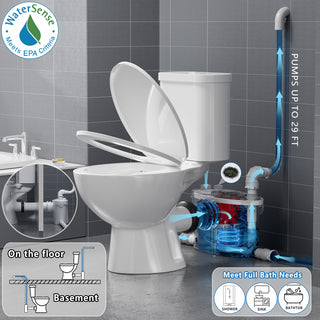
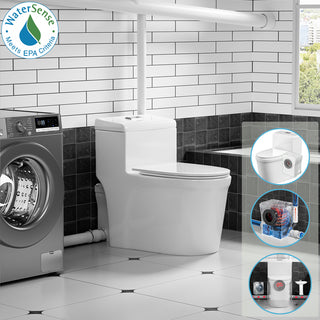
Space-constrained bathrooms gain from round-front or corner toilets that reclaim floor area. Combination toilet-sink units maximize ultra-compact spaces. For locations where the drain sits in the wrong place — basements, garage conversions, or distant additions — macerating (upflush) toilet systems provide a practical alternative: waste pumps to existing plumbing without breaking concrete or rerouting pipes.
For many homeowners, these options don't just simplify the renovation — they make it possible at all.
Best Toilet Types for Spring Renovation in the U.S.
Match toilet type to your specific renovation scenario rather than style alone. Most U.S. projects fall into one of three categories: straightforward replacement, complex plumbing constraints, or space optimization.
Toilets for Simple Replacement — No Layout Changes
If replacing the toilet in its current location, focus on compatibility with the existing drain configuration and performance upgrades — no structural work required.
Step One · Confirm Your Drain Type and Measurements
Identify whether your bathroom has a floor-outlet or rear-outlet (wall-outlet) drain. For floor-outlet drains — standard in most U.S. homes — measure the rough-in distance from the finished wall to the center of the floor drain. Common sizes are 10", 12", and 14", with 12" most prevalent. For rear-outlet drains, measure the vertical distance from the finished floor to the center of the wall drain opening and match it to the new toilet's specification.

Step Two · Verify Clearance and Footprint
Drain compatibility alone is not enough. Confirm the toilet's overall dimensions — depth, width, and bowl extension from the wall — against your available space. U.S. building codes (IPC/IRC) require a minimum of 15 inches from the toilet centerline to any side wall or obstruction, and at least 21 inches of clear space in front of the bowl. Where possible, use 18 inches on each side and 24 inches in front for enhanced comfort.
Step Three · Upgrade for Efficiency and Comfort
With compatibility confirmed, make meaningful improvements:
- WaterSense-certified low-flow toilets (1.28 gallons per flush or less) that noticeably cut annual water costs
- Dual-flush systems offering user control over flush volume
- Comfort-height or extra-tall bowls (standard ADA-compliant 17–19 inches, up to 21 inches) that reduce strain for sitting and standing
Step Four · Add Modern Convenience or Style
A simple replacement also upgrades usability and appearance:

- Skirted (concealed trapway) designs that clean far more easily than exposed-trapway models
- One-piece construction (fewer leak points, easier maintenance) versus lower-cost two-piece models
- Bidet-compatible seats or integrated bidet units
- Expanded finish options beyond white ceramic, including glossy black, bone, and custom colors at mid-range prices
These upgrades deliver the highest ROI with minimal installation complexity.
Toilets for Complex Plumbing Situations
Not every renovation features cooperative plumbing. Common challenges include basement bathrooms (drain below sewer line), garage or attic conversions, home additions far from the main stack, or any space where breaking concrete proves impractical or expensive. Standard gravity-fed toilets cannot function here without major structural work.

Macerating Toilets: A Flexible Installation Solution
Macerating (upflush) toilets solve these constraints. Instead of relying on gravity, a pump unit macerates waste and discharges it through a small pipe — upward or horizontally — to existing plumbing.
- No need to break floors or reroute drain lines
- Ability to pump to higher sewer lines
- Many systems also serve a sink and shower in the same space
In many cases, a macerating toilet does not merely simplify the project — it makes the renovation viable.
For installation details (using the Simple Project SNFLEX as a clear example — principles apply to most upflush systems):
Toilets for Small and Compact Bathrooms
Limited floor space remains common in older homes, urban apartments, and powder rooms. The right choice recovers usable area without sacrificing comfort.
Round-Front Toilets: Less Footprint, Adequate Comfort
Round-front bowls sit approximately 2 inches shorter in depth than elongated models. In tight bathrooms, this difference can determine door swing clearance or code compliance while still providing comfortable daily use.
Corner Toilets: Turning Dead Space into Usable Space
Corner toilets position the tank diagonally against a corner, freeing wall space along the room's primary axis. They excel in narrow or awkward layouts that would otherwise create bottlenecks.

Toilet-Sink Combo Units: Maximum Efficiency for Ultra-Compact Spaces
In the most constrained scenarios — a half-bath under stairs or small addition — combination toilet-sink units integrate a basin above the tank. Hand-washing water flows directly into the tank for the next flush, reducing water use and eliminating a separate sink footprint.

In small-bathroom renovations, the right compact solution dramatically improves daily usability without altering room dimensions.
How to Choose the Right Toilet for Your Bathroom Upgrade
Work through these key decision factors before purchasing:
- Installation Complexity — Assess your plumbing situation early. A drop-in replacement requires different planning than a basement addition.
- Space and Layout Measurements — Measure drain type, rough-in distance, and available clearance first. A showroom-perfect toilet may not fit your bathroom or may meet code minimums yet feel cramped.
- Long-Term Value Over Upfront Cost — Weigh water efficiency, maintenance ease, and material durability. A slightly higher-priced WaterSense model often pays for itself through reduced bills.
- Coordination with the Rest of the Bathroom — Ensure the toilet's footprint and style complement vanity placement, door swing, and traffic flow for a more spacious, intentional result.
- Venting and Drain Compatibility — Proper venting is essential for gravity-fed toilets (especially siphonic models) to prevent trap seal loss and sewer gas entry. Macerating systems are motor-driven and generally require no dedicated vent line, but always verify local building codes and manufacturer specifications.
The Right Toilet Makes the Whole Renovation Possible
In 2026, U.S. homeowners have more practical options than ever: efficient fixtures that pay for themselves, smart comfort features once limited to luxury builds, and flexible systems that eliminate plumbing barriers.
The right toilet is the planning decision that determines your entire renovation's success.
Start with the right toilet — and the rest of your renovation will follow.
Explore flexible toilet solutions designed for real-life 2026 renovation challenges and find the one that fits your space.