






Can You Plunge a Macerator Toilet?
Earlier today, one of our visitors asked me an interesting question: Can you use a plunger on a macerating toilet? I was curious what others thought about this, so I did a quick search and found a Reddit thread where someone claimed they used a plunger on their RV macerating toilet to help push "stuff" closer to the impeller for better flushing.
However, after talking further with our factory team and running real-world tests, we’ve come to the opposite conclusion. Standard household toilets have much stronger flushing power than RV toilets, which eliminates the need to use a plunger to move "stuff" closer to the macerator in the first place.
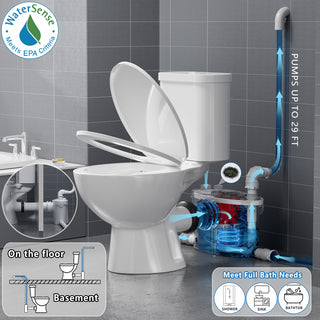
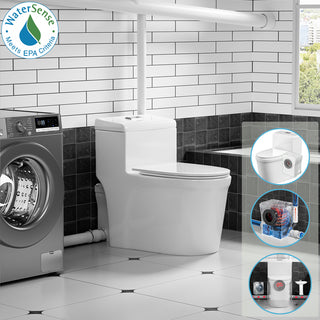
Macerator (or "upflush") toilets are built around a fundamentally different mechanism than standard gravity-flush models, and that difference matters enormously when things go wrong. Unlike conventional toilets that rely on gravity and a large-bore drain, macerator toilets use an electric motor and a set of rotating blades to grind solid waste into a fine slurry before pumping it through a narrow discharge pipe.
This compact, pressurised system is efficient—but it is also sensitive to force applied in the wrong direction. Here is what you need to know.
Why Plunging a Macerator Toilet Can Cause Damage
Using a plunger introduces three specific risks that simply do not apply to a standard gravity-flush toilet:
A plunger creates a sudden surge of air or water pressure. In a macerator system, that surge can force debris deeper into the pump chamber, jamming the blades or stalling the motor.
Excessive back-pressure can rupture internal seals or drive water toward electrical components—a potentially dangerous outcome in a unit running on mains power.
Most macerator clogs originate in the pump chamber or discharge pipe, not the bowl. A plunger cannot reach either area, so it is unlikely to help even when it does not cause harm.
What to Do When Your Macerator Toilet Is Blocked
Work through these steps in order before calling a plumber:
-
Cut the power
Switch off the macerator unit at the wall or circuit breaker. Never attempt to inspect or clear the pump while it is live.
-
Check the bowl for visible obstructions
Remove anything that should not have been flushed—wet wipes, cotton pads, or similar items—using gloves and tongs if necessary.
-
Consult your manual and open the service panel
Most units have an accessible cover for safe inspection of the pump chamber. With the power off, carefully remove any visible debris. For blade blockages, use thin-nosed pliers to gently turn the blades counter-clockwise while clearing waste.

-
Attempt a water-only flush — once only
Restore power briefly and flush with clean water. If the unit still won't drain, do not repeat. Proceed to professional help to avoid motor strain.
-
Call a professional
If the unit still won't drain, or if you suspect blade or motor damage, contact a plumber experienced with macerator systems or reach out to the manufacturer's support line.
Safer Alternatives to a Plunger
Several methods can address macerator blockages without putting internal parts at risk:
-
Manufacturer-recommended descaler or cleaner — Use the specific product supplied or recommended by your unit's manufacturer (e.g., Saniflo Descaler). These are formulated to be safe for seals and blades and effective against both organic matter and limescale build-up. Avoid generic chemical drain openers.
-
Manual clean-out via the service panel — On units with accessible panels, removing the cover and clearing debris by hand (with the power off) is often the most direct and safest approach.
-
Manufacturer service tools — Some brands supply purpose-built inspection tools. Always follow their instructions rather than improvising.
A soft, flexible drain snake should only be used in very rare cases where the blockage is clearly in the toilet trap before the pump chamber—and even then, only with extreme care and per the manual. It is generally safer to open the unit directly.
How to Prevent Macerator Toilet Clogs
The most effective fix for a macerator clog is never having one. These systems are reliable when used correctly, but they are intolerant of misuse.
-
✓Flush only human waste and toilet paper. No exceptions.
-
✓Never flush wet wipes—even those labelled "flushable"—paper towels, cotton wool, sanitary products, or any non-dissolving material.
-
✓Run a flush of clean water through the system regularly, especially in bathrooms that see infrequent use.
-
✓Follow the manufacturer's recommended descaling schedule (typically every 3–6 months, or more frequently in hard-water areas) using the approved descaler.
-
✓Schedule a professional inspection annually if the unit is used daily.
Hard-water areas accelerate limescale build-up inside the pump and discharge pipe. If you live in a high-hardness region, consider shortening your descaling interval to every 6–8 weeks and installing a water softener upstream of the unit.
Common Misconceptions
-
It's still a toilet—I can treat it like any other.The pump and electrical components change everything. What is harmless on a standard toilet can be destructive on a macerator unit.
-
One quick plunge won't hurt.Even a single forceful plunge can push waste further into the pump or compromise internal seals. There is no safe level of plunging on a macerator toilet.
-
If it clogs, it must be broken.Most macerator blockages are caused by flushing the wrong materials or gradual limescale build-up—not mechanical failure. Many can be cleared without professional help once you understand how the system works.
Final Thoughts
Plungers and macerator toilets are fundamentally incompatible. The pressure that makes a plunger effective on a standard toilet is the same force that can damage a macerator's pump, seals, and motor. When something goes wrong, switch off the power, investigate the cause carefully, and use the tools and methods designed for this type of system.
Handled correctly, a macerator toilet is a robust and convenient solution for bathrooms located away from the main drain line. Understanding its limitations—and respecting them—is the key to keeping it running smoothly for years to come.